

Solar Carport: Clean Energy & Smart Parking Solution
Hey there—if you’re eyeing a solar carport for your house, office parking lot, or that big open space behind your business, I’ve got you covered. This isn’t some fluffy overview; it’s a no-nonsense walkthrough from someone who’s dug into the nitty-gritty of these setups. We’ll cover what a solar carport really is, why folks pick it over slapping panels on the roof or sticking them in the yard, what it’ll actually set you back (with real numbers),
the design tweaks that make or break it, how to get it installed without headaches, upkeep tips, money-saving incentives, and even some everyday stories from people who’ve done it. I poked around a bunch of other guides out there to grab the key stuff—like costs and benefits—but I’ve shuffled it all into a flow that actually walks you through deciding if this is your move.
Think of this as your friendly blueprint: straightforward talk, zero jargon overload, and everything you need to sketch out a plan that fits your life.
What is a solar carport and why it’s more than just shade
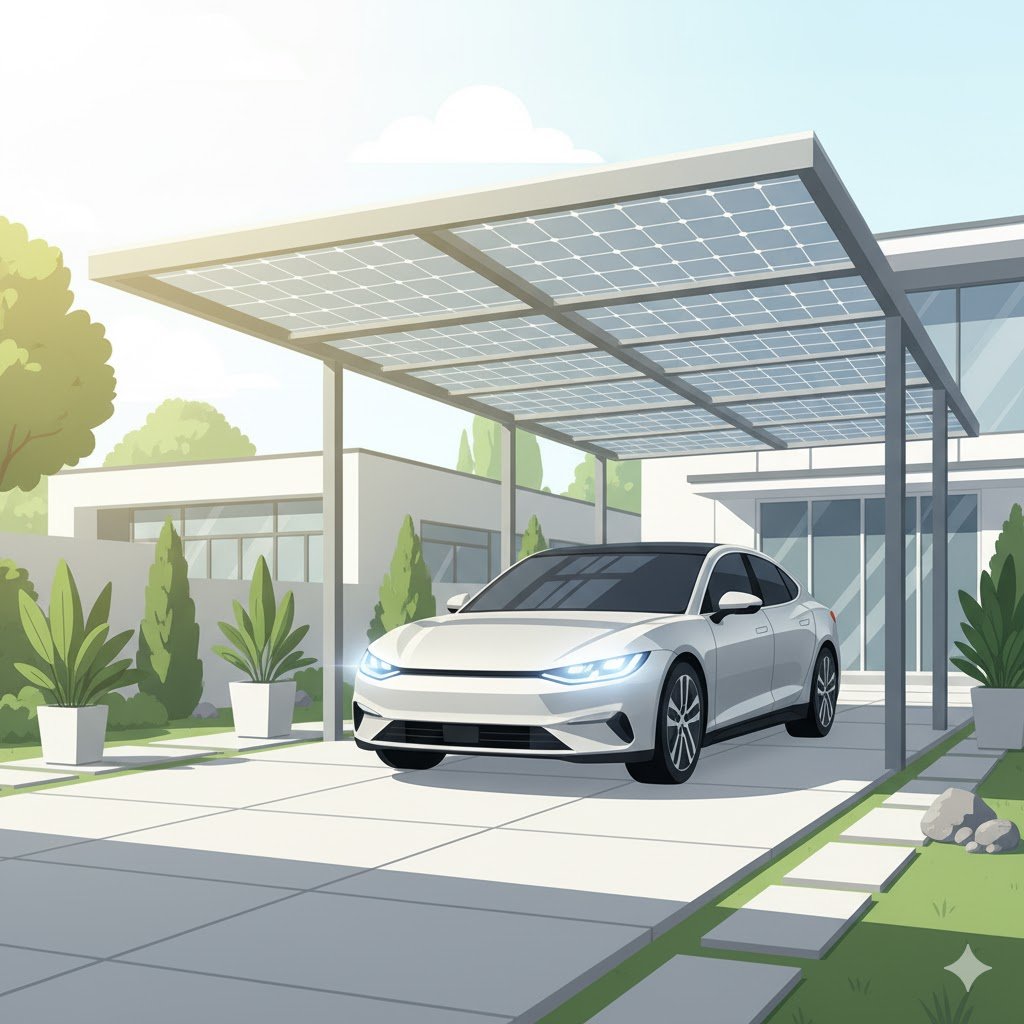
Picture this: a sturdy overhang right over your driveway or parking spots, loaded with solar panels that soak up the sun like it’s their job—because it is. That’s a solar carport in a nutshell: a standalone frame that holds photovoltaic panels high enough to keep your car (or a row of employee rides) safe from scorching rays, pounding rain, or winter slush. But here’s where it gets clever—it’s not just fancy shade.
It flips dead parking space into a power plant, churning out clean electricity for your home, office, or even to sell back to the grid. No eating up your yard or wrestling with roof access. Toss in spots for EV plugs, built-in lights, or smart energy gadgets, and suddenly you’ve got a multitasker that pays for itself while making your spot more livable. For me, that’s the hook: it’s solar with a side of smarts, perfect when your roof’s too shady or beat-up for panels.
Who benefits most from installing a solar carport?
Not everyone’s chasing the same thing, so let’s break down who high-fives a solar carport hardest. If you’re a homeowner with a wonky roof—maybe it’s flat, north-facing, or just too small to hit the power sweet spot—this bad boy lets you crank out serious juice without drilling into your house. Got a long driveway? Boom, shaded parking plus free electrons. Businesses? Oh man, this is gold.
Strip malls, college campuses, factories, or apartment blocks turn massive lots into money-makers: shade keeps customers happy (and cars cooler), it screams “we care about the planet” to boost your green cred, and tenants love the perks. Cities and rec centers? They slap these up for public lots to cut shade-related gripes while ticking sustainability boxes. Bottom line: if parking’s your underused asset and you want power without the usual hassles, this is your crowd-pleaser.
Common competitor headings (and how we reframe them)
I’ve scanned the usual suspects—those glossy sites and blogs—and yeah, they all hammer on “benefits,” “costs,” “rooftop showdowns,” “install timelines,” and “funding hacks.” Solid stuff, but it often reads like a sales pitch checklist. Here, I’m flipping the script: we start with “does this even fit your spot?” then drill into full-lifecycle bucks (way beyond the sticker shock), design picks that amp up output, and ops that keep it humming long-term. The consensus? These things run pricier per watt upfront thanks to the beefy build, but they layer on shade value, EV boosts, and flexibility that rooftops can’t touch. It’s like buying a truck instead of a sedan—you pay more, but you haul way more.
The big pros of a solar carport (beyond energy)
Sure, the kilowatts are the headline, but let’s talk the quiet MVPs. Your car’s interior won’t bake at 140 degrees anymore—huge in sweaty summers or hail-prone winters. Parking lots feel less like asphalt ovens, cutting down on that baked-in heat that makes everyone cranky. For shops or offices, it’s a billboard of “we’re forward-thinking,” drawing in green-minded shoppers or talent. Hook up EV chargers? Now it’s a pit stop that slashes your fleet’s gas tab and woos electric drivers. I’ve chatted with owners who say the shade alone justified half the cost—happier employees mean fewer “my AC died” complaints. It’s that sneaky value stack: power + protection + pride.
Realistic cost expectations: what a solar carport will likely cost you
Money talks, and nobody wants surprises here. Fresh 2025 numbers peg the average at about $3.17 per watt installed—yep, that’s the full shebang: panels, frame, wiring, and sweat equity. Why the premium over rooftop’s $2.56/watt? You’re building a beast of a structure with deep footings and wind-proof steel. For a cozy two-car home setup (say, 10 kW), you’re looking at $25,000–$35,000 before perks.
Scale up to a 50-spot commercial canopy (100 kW)? Economies kick in, dropping closer to $2.75–$3.50/watt, or $275,000–$350,000. Toss in EV plugs or batteries? Add 20–30%. Region matters too—coastal winds jack up engineering, sunny spots like California shave years off payback. Pro tip: factor in the shade’s “free” AC for your rides; it pads the real ROI.
Solar carport vs rooftop vs ground-mounted: which is best?
It’s like picking shoes: depends on the terrain. Rooftop’s the budget champ—cheaper install, no new build—but you’re stuck if your roof’s shaded, sloped wrong, or groaning under weight. Ground-mounts shine for big farms, tilting just right for max sun, but they gobble land you could park on or plant. Enter the carport: Goldilocks zone. It dodges roof drama, keeps your lot usable (and cooler), and lets you angle panels like a pro. If shade’s a perk or your roof’s a no-go, this wins. I’ve seen offices swap ground plans for carports and never look back—same juice, better parking flow.
How a solar carport is designed: elements that drive performance
Design’s where the magic (and math) happens—nail it, and your system’s a sun-chasing machine. Start with tilt and pitch: aim for your latitude’s sweet spot (say, 30 degrees in Texas) to grab max rays without shading the next row. Spacing? Wide enough for cars but tight for efficiency—engineers crunch self-shade like puzzle pros. Foundations: drilled piers for shaky soil, concrete slabs for steady ground. Materials? Galvanized steel laughs at rust; add coatings for salty air. Electrics: tuck inverters nearby, snake conduits under the canopy, and plan for combiner boxes. Dreaming of batteries or V2G? Carve out ventilated spots now. Get this right, and you’re not just building shade—you’re crafting a peak performer.
Permits, codes, and structural engineering considerations
Don’t skip the red tape dance; it’s a solar carport’s reality check. These count as mini-buildings, so expect permits for wind gusts (up to 120 mph in Florida), snow piles (Colorado’s no joke), and quakes if you’re out west. Fire codes might demand extra spacing; ADA means ramps and clear paths. Commercial gigs layer on stormwater smarts and lighting rules. Chat up your local building folks early—grab a structural engineer to stamp plans and flag gotchas. I’ve heard horror stories of mid-build halts over overlooked seismic tweaks; a quick consult saves sanity (and cash).
Installation process: how a solar carport goes from plan to power
From blueprint to buzz, it’s a relay race: kick off with a site scout (soil tests, shade maps), then engineer and permit (4–8 weeks). Foundations drop next—dig, pour, cure (rain delays, anyone?). Hoist the frame like a giant Meccano set, bolt on racks and panels row by row. Wire it up: inverters, ties to your meter, maybe EV hookups. Test, inspect, flip the switch. Home jobs wrap in 2–4 weeks; big commercial arrays stretch to 3–6 months with paving side quests. Pick a crew that juggles civil and solar seamlessly—smooth sailing means you’re shading (and powering) sooner.
Performance and yield: what energy can you expect from a solar carport?
Output’s no crystal ball, but here’s the scoop: a well-tuned setup spits out 1,200–1,800 kWh per kW installed yearly, depending on your sun budget (hello, Arizona vs. Seattle). That’s rooftop-level if tilted right—minimal shade from trees or neighbors, optimized rows. A 30 kW home canopy? 36,000–54,000 kWh a year, enough to zap most bills. Commercial? Layer in on-site use for lights/HVAC, plus net-metering credits. Factor local rates ($0.15/kWh average) and boom—savings stack. Tools like PVWatts nail your numbers; I’ve run ’em for buddies and watched eyes widen at the “free” power potential.
Financing a solar carport: buy, lease, PPA, or loan?
Cash or credit? Your call, but let’s map options. Buy outright: quickest payback (6–10 years), full ITC grab. Loans stretch it interest-free via green banks, keeping ownership perks. Leases or PPAs? Zero down, fixed bills from a solar firm—great for renters or cash-tight ops, but you miss some tax goodies. Businesses love depreciation write-offs; pair with grants for turbo ROI. Crunch scenarios: ownership shines long-term, leases ease entry. Talk to a solar lender early—I’ve seen folks shave 20% off effective costs with the right mix.
Adding EV charging: magnify the value of your solar carport
EVs and solar carports? Match made in green heaven. Pipe that fresh power straight to plugs—cut grid pulls for your Tesla or fleet vans, dropping “fuel” to pennies per mile. Smart setups throttle charge during peak sun, spill to batteries at night. Public lots? Chargers lure leaf-driving customers, boosting dwell time (and sales). Fleets? Slash TCO big-time. It’s not add-on; it’s multiplier—I’ve seen parking ops turn “meh” lots into EV oases, revenue jumping 15–20%.
Maintenance, lifespan, and warranties: keeping a solar carport healthy
Keep it simple: quarterly rinses zap dust (hose-down, no scrubbing), eyeball bolts for looseness, clear drains of leaves. Electrics? Annual pro checks for grounds and arcs. Panels? 25-year “80% output” guarantees; steel frames shrug off decades if coated right. Inverters? Swap at 10–15 years. Budget $100–$500/year for homes, more for big arrays. It’s low-fuss—way less than pool upkeep—and preserves that sweet ROI curve.
Sustainability and ESG benefits of solar carports
Beyond the watts, it’s a planet win: slash Scope 2 emissions by ditching grid juice, cool urban heat islands with shaded blacktop (less AC strain citywide). For corps, it’s ESG catnip—park under panels, snap a pic, tout your 50-ton CO2 dodge. Measurable, visible, scalable. Communities? Public carports model clean living, cut asphalt fade. It’s not preachy; it’s practical proof that green pays in feel-goods and hard metrics.
Common mistakes to avoid when planning a solar carport
We’ve all got blind spots—don’t let ’em bite. Undersizing for wind/snow? Your canopy crumples like foil. Forgetting EV load balancers? Peak-charge overloads trip breakers. Permit procrastination? Months of delays. Cheaping out on installers? Shoddy welds mean callbacks. Vet scopes hard: who’s on hook for panels vs. frame? References over rock-bottom bids. Plan buffers for surprises; steady hands turn “what if” into “nailed it.”
Case examples: how different owners use solar carports
Real life’s the best teacher. Take that state uni: they blanketed commuter lots with 200 kW canopies, juicing labs and student chargers—now it’s a sustainability showpiece, with kids geeking on the app’s live stats. Retail plaza? Tilted like a roof over 100 spots, offsetting store lights and drawing EV shoppers—sales perked up 10% from longer lingers. Tech campus? Employee shade plus fleet plugs, axing $50k yearly in gas/grid. Tailor-made magic: each one’s a custom fit for ops and wallets.
How to choose the right installer or manufacturer
Hunt like your investment depends on it (it does). Seek solar vets with structural chops—ask for carport portfolios, not just roof jobs. Turnkey pros handle dirt-to-debug; demand engineer-stamped docs and ironclad warranties (25 years panels, 20 structure). Big builds? EV integration experience is table stakes. Skip lowballers sans refs; chase post-install support. Interviews feel like dating—vibes plus proofs seal the deal.
Incentives and tax considerations that improve payback
Uncle Sam and states love solar: 30% federal ITC covers carports like rooftops, plus domestics bump to 40%. Commercial? MACRS depreciation accelerates write-offs. Local rebates, SREC sales, net-metering sweeten pots. Check DSIRE database for your zip—I’ve seen paybacks halve from a $5k grant. Rules shift (hello, IRA extensions), so model fresh; it’s free rocket fuel.
ROI example: a simplified financial snapshot
Let’s crunch a 30 kW commercial canopy at $3.17/watt: $95,100 installed. Florida sun? 1,500 kWh/kW yearly = 45,000 kWh output. At $0.12/kWh avoided, that’s $5,400/year saved. Minus $500 maintenance, net $4,900. ITC knocks 30% off ($28,530 back), payback ~7 years. Add EV revenue ($2k/year) and shade value? Under 5. Over 25 years, $100k+ net. Tweak for your rates—it’s competitive when you count the full picnic.
Emerging trends: BIPV, smart canopies, and integrated storage
Solar’s getting brainy: BIPV weaves panels into seamless canopies—no clunky racks. IoT dashboards track output in real-time, optimizing for clouds or peaks. V2G flips EVs into grid batteries; pair with onsite storage for outage-proof hubs. Costs dip yearly—expect microgrid carports as norm by 2030, turning parks into power islands.
Step-by-step: planning your solar carport project (high-level)
Ready? Step 1: Nail goals—shade first or max kWh? Map your lot. Step 2: Rope in engineer for load checks, solar pro for yield sims. Step 3: Bid three turnkeys, spec everything. Step 4: Permit chase and incentive lock-in. Step 5: Phase construction—foundations, frame, panels, power-up. Step 6: Monitor and tweak. It’s a roadmap, not rocket science—steady wins.
Final verdict: is a solar carport the right choice?
Short answer: hell yes, if parking’s your playground and you dig dual-duty gear. Pricier per zap than roofs, sure, but the shade, EV flex, and green glow tip scales. For lot-rich spots craving utility + uplift, it’s smart money—functional today, future-proof tomorrow.
Frequently Asked Questions (FAQs)
What exactly is a solar carport? It’s a standalone shaded structure topped with solar panels, generating power while keeping your wheels (or lot) comfy.
How much does a solar carport cost? Ballpark $3.17/watt in 2025—think $15k–$30k for home scale, more for big builds, but incentives shave chunks.
Does a solar carport require special foundations? Yep—beefy ones tuned to soil, winds, and snow. More muscle than roof mounts, but they last.
Can I add EV chargers to a solar carport? 100%—it’s a powerhouse combo, offsetting charges with sun-fresh juice for max savings.
Is a solar carport better than rooftop solar? Depends: roofs win on cheap watts, but carports crush on shade, space savings, and EV vibes where roofs flop.
How long will a solar carport last? Panels warrantied 25 years at strong output; frames go 40+ with care. Inverters? Refresh every decade-ish.
Are there tax incentives for solar carports? Big time—30% federal ITC, plus locals. Hunt ’em down; they turbocharge your math.


