

Square Body Trucks: Classic Design, Tips & Restoration
Man, there’s just something about a square body truck that hits different. You see one rolling down the road—those razor-straight lines, the big upright grille, the way the fenders look like someone took a ruler to them—and you instantly know it’s a ‘73–’87 Chevy or GMC. Doesn’t matter if it’s bone-stock, slammed on airbags, or lifted with 40s; it still turns heads. These trucks have become straight-up legends, and honestly, the love only seems to be growing.
Origins and Definition: What Are Square Body Trucks?
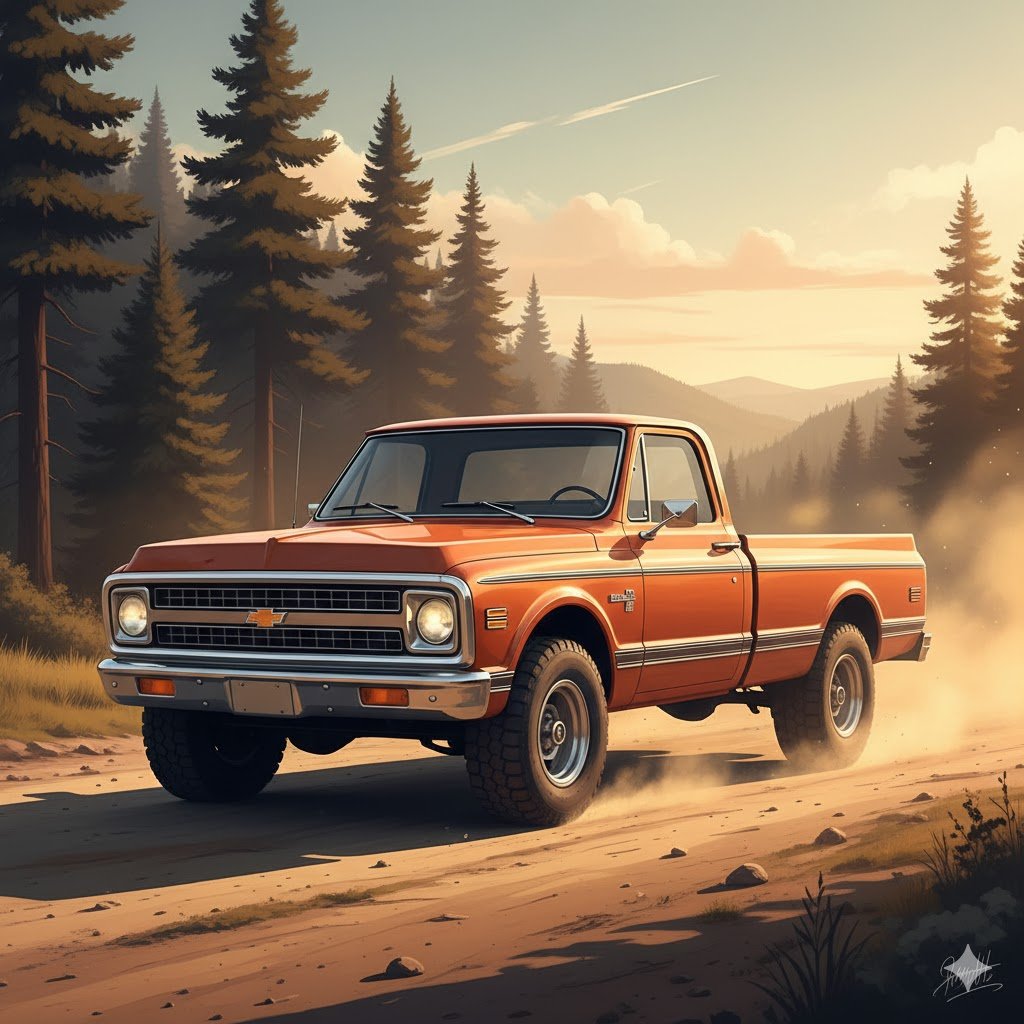
Alright, let’s clear this up right off the bat. When everybody says “Square Body Trucks,” they’re talking about the third-generation Chevrolet and GMC C/K pickups built from 1973 through 1987. GM actually called them the “Rounded-Line” series because of the slightly curved windshield and door edges (marketing being marketing), but come on—look at the thing. It’s a rolling rectangle. That’s why the nickname stuck and nobody’s letting it go.
You had everything from half-ton C10s to one-ton duallys, short beds, long beds, regular cabs, crew cabs, Suburbans, even Blazers. If it had that boxy DNA, it’s a square body in the eyes of the culture.
Historical Evolution: From Rounded-Line to Cult Classic
These trucks showed up in ’73 after GM basically threw the old design out and started fresh. They wind-tunnel tested the hell out of the prototypes (pretty advanced for the time) and ended up with something that looked tougher than nails but actually slipped through the air better than the previous generation. Over the next 14 years they kept tweaking—better interiors, more power options, throttle-body injection by ’87—but the core look barely budged. That consistency is a huge part of why people are obsessed.
When the curvy GMT400 trucks took over in ’88, a lot of folks thought the square bodies were done. Nope. Instead they just went straight into icon status.
Design Characteristics: What Makes the Square Body Look So Iconic
It’s honestly hard to explain how perfect the proportions are until you stand next to one. Flat hood, flat doors, flat roof, squared-off wheel openings—like a kid drew a truck with a ruler and it somehow became the coolest thing on the road. The giant windshield and side glass give you ridiculous visibility, and the body lines make patching rust (sadly common) way easier than on curvy trucks. Everything is straight, everything is simple, and that simplicity is why they photograph so damn well whether they’re rusty work trucks or gleaming show builds.
Engine Options and Powertrain: Under the Hood of Square Body Trucks
You could get pretty much whatever you wanted back then:
- Bulletproof inline-sixes (250 or 292) if you just needed to haul feed and didn’t care about winning stoplights
- Small-block V8s—305, 350, sometimes a 454 big-block if you wanted to scare the neighbors
- Even a 6.2L diesel for the guys who measured life in torque and MPG
By ’87 they finally ditched the carb for throttle-body injection on a lot of models, which made them way more driveable. These days the 350 small-block is still the king of swaps because parts are everywhere, it makes great power, and it just belongs in the engine bay like it was born there.
Chassis, Suspension, and Handling: How Square Bodies Drive
They ride like… well, like 1970s trucks. Leaf springs front and rear on 4×4s, coils up front on some 2WD models, and a ladder frame that’ll probably outlive us all. They’re not sports cars—there’s body roll, the steering’s slow, brakes are drums unless you upgrade—but put some modern shocks on, swap to power discs, maybe drop it an inch or two, and suddenly they’re shockingly pleasant on the highway. And off-road? Lift it, throw some 35s under it, lock the diffs—these things were built for abuse and they still eat trails for breakfast.
Trim Levels, Variants & Body Styles: Square Body Diversity
GM wasn’t messing around with options. You’ve got:
- Short-bed regular cabs (the classic hot-rod look)
- Long-bed fleetsides (workhorse central)
- Stepsides (because everyone secretly wants one)
- Crew cabs (rare and stupidly cool)
- Suburbans and K5 Blazers on the same platform
Trim went from bare-bones Custom to plush Silverado with carpet and power everything. Finding a high-trim ’87 Silverado short bed feels like winning the lottery.
Why Enthusiasts Still Love Square Body Trucks
Look, the love isn’t just nostalgia goggles. These trucks check every box:
- Dead-simple to work on (you can still see the ground through the engine bay)
- Parts fall off the trees—reproduction panels, weatherstripping, literally everything
- Blank canvas for any build you can dream up
- Still (relatively) affordable compared to ‘60s muscle cars or Broncos
- They just feel honest. Turn the key, it runs. Break something, fix it with basic tools.
Challenges and Common Issues With Square Body Trucks
They’re not perfect. Here’s what bites most owners eventually:
- Rust. Cab corners, rockers, floor supports, bed supports—salt-belt trucks can look like Swiss cheese underneath.
- Ancient wiring that turns to dust if you sneeze on it.
- Gas mileage that makes you cry at the pump.
- Brakes that were barely adequate in 1980.
- Zero modern safety or comfort unless you add it.
But every single one of those things has a known fix, and the aftermarket has your back.
Restoring a Square Body Truck: How to Approach the Project
People do everything from frame-off concours restorations to “patina and LS swap” in a weekend. My personal roadmap if you’re jumping in:
- Buy the straightest, least-rusty one you can afford (saves years of your life).
- Strip it down and media-blast the frame—know exactly what you’re dealing with.
- Fix the metal right the first time. Reproduction cab corners and rockers are cheap insurance.
- Decide powertrain early—keeping the original 350? Rebuild it. Want modern manners? LS swap and never look back.
- Upgrade brakes, steering, and suspension while everything’s apart. You’ll thank yourself later.
- Paint it whatever makes you happy—factory two-tone, wild candy, satin black, whatever.
- Drive the wheels off it.
Aftermarket & Swap Culture: How Modern Tuning Meets Vintage Square Bodies
This is where it gets fun. The square body aftermarket is insane—LS swap kits, complete modern front clips, bolt-in coilover setups, digital dashes that look factory. You can literally build a brand-new 2025 truck that just happens to wear 1985 sheet metal. And because the bodies are so simple, every custom shop and their brother has figured out how to make parts bolt right up. It’s honestly the golden era for these trucks.
Square Body Trucks in Off-Road and Daily Use
I know dudes who daily their square bodies year-round and guys who beat them half to death on rocks every weekend. The ladder frame and body-on-frame construction just shrug it off. Throw a mild lift and some 35s on, maybe lock the rear diff, and you’ve got a pre-runner that looks 40 years old but runs with modern stuff. Or drop it, bag it, LS it, and cruise to car shows getting 20 mpg. They do everything.
The Square Body Truck Market: Trends & Values
Prices have absolutely exploded the last five years, but they’re still reasonable compared to other classics. A clean, running driver-quality short bed is $15–25k now. Really nice ones or tasteful restomods are pushing $50k+. Rusty projects are still out there under $5k if you’re willing to swing the hammer. Later ‘86–’87 trucks with factory TBI and better interiors are the hot ticket right now.
Why Square Body Enthusiasts Are Passionate: More Than Just Nostalgia
It’s deeper than “my dad had one.” These trucks represent a time when stuff was overbuilt, easy to fix, and didn’t need a computer science degree to diagnose. Turning a neglected field find into something that rips down the highway with modern power while still looking like 1985… there’s real satisfaction in that. Plus the community is legit—one of the friendliest corners of the car world.
Common Mistakes to Avoid When Buying or Restoring a Square Body
- Thinking “a little rust” is no big deal (it’s cancer, treat it early).
- Buying the prettiest one instead of the straightest one.
- Skipping the frame inspection—cracks or bad repairs kill projects.
- Half-assing brakes and then wondering why it won’t stop.
- Going too wild on the first build and regretting it later.
Restoration or Buyer’s Checklist: What to Look for in a Square Body Truck
Bring a magnet, a flashlight, and zero emotions. Check:
- Cab corners, rockers, floors, door bottoms
- Frame rails (especially behind rear wheels)
- Bed supports and wheel wells
- Engine bay for previous fire damage or hack repairs
- Whether the VIN tag and trim tag match
- That it actually runs and stops before you fall in love
Preservation vs Modding: Which Route Should You Take?
- Keep it 100% stock → you own a time capsule (cool, but you’ll baby it).
- Light restomod (TBI 350, discs, A/C) → best of both worlds.
- Full modern build (LS3, 4L80E, coilovers, digital dash) → drives like a new truck wearing vintage clothes.
Most people land somewhere in the middle and are happier for it.
Square Body Trucks in Popular Culture & Restoration Community
You can’t scroll Instagram or YouTube without tripping over another square body build. From C10 Nationals to random dudes in their driveways, everybody’s got one in progress. The community is ridiculously helpful—need a measurement for a ‘79 grille? Someone will have it in ten minutes. It’s one of the best parts of the hobby.
Future Outlook: The Square Body Revival
These trucks aren’t going anywhere but up. With LS swaps getting cheaper, EV conversion kits starting to pop up, and reproduction parts better than ever, we’re in a golden age. Ten years from now there will be square bodies with 600 hp, 30 mpg, and Apple CarPlay that still look exactly like they did in 1985. And honestly? I can’t wait.
Frequently Asked Questions (FAQ)
Q: What years are square body trucks? A: 1973–1987 Chevy/GMC C/K series. That’s the golden window.
Q: Why call them square bodies if GM said Rounded-Line? A: Because GM was wrong and the internet is undefeated.
Q: Best engine to swap in? A: LS. Always LS. (Though a built 350 is still awesome.)
Q: Are they daily-drivable? A: 100%. Upgrade brakes, steering, and seats and they’re shockingly nice on long trips.
Q: How bad is the rust reputation? A: Real bad if it lived in the salt belt. But fix it once, POR-15 everything, and you’re good for decades.
Q: Will they keep going up in value? A: Clean ones, yes. Rusty projects will always be out there for the builders.
Conclusion: The Legacy and Future of Square Body Trucks
At the end of the day, square bodies are proof that simple, tough, good-looking design never goes out of style. They were overbuilt when new, easy to fix forever, and now—with modern power and parts—they’re some of the coolest trucks you can own, build, or just stare at in a parking lot.
Whether you want a bone-stock survivor, a slammed street machine, or a trail rig that looks like it’s from 1984, there’s never been a better time to jump in. These boxy old Chevys and GMCs aren’t just classics—they’re a lifestyle. And honestly, once you own one, everything else just feels a little… round.


