

My Voice in America’s Democracy – The Power of Participation
Understanding “my voice in America’s democracy”
When you focus on the phrase my voice in America’s democracy, you’re tapping into something deeply personal yet intrinsically communal. It’s about how you—your experiences, opinions, identity—fit into the grand, ongoing story of democratic participation in the United States. It’s about more than casting a ballot; it is about feeling heard, valued, active, and relevant in a system often described by the mantra “government of the people, by the people, for the people.” When we say my voice in America’s democracy, we’re exploring how our individual story enters and influences the larger narrative of civic life, public policy, representation, and collective decision-making.
In many ways, democracy in America has always held two interlocking ideas: the ideal that every citizen has the capacity to influence their society, and the reality that many voices struggle to be heard. By focusing on your personal voice in America’s democracy, you invite the reflection: how do you show up, what channels do you use, what barriers exist, and how might you shape change?
The Historical Backdrop: Democracy’s Evolution and the Individual
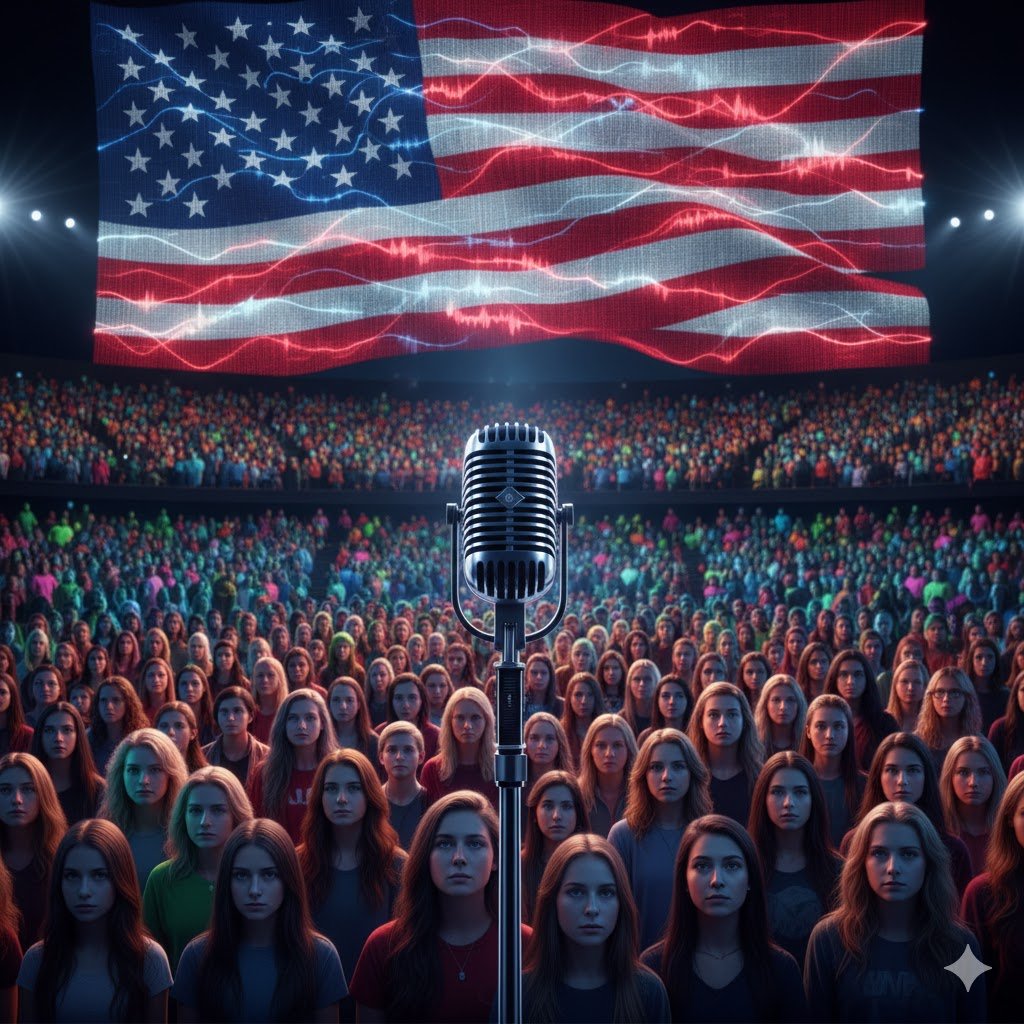
To situate my voice in America’s democracy, we must glance back at how the United States built its democratic foundations—and how the individual voice gained relevance. From the earliest days, the concept of popular sovereignty gained traction: the people hold power, not a monarch. An important exhibition titled “Voices and Votes: Democracy in America” traces how representation, suffrage, and public participation have evolved. humanitieskansas.org+1
Over time, the interplay between individual agency and collective governance has grown more complex. Slavery, disenfranchisement, civil-rights movements, expansion of the franchise, and modern debates over voter access all shape the terrain in which your voice travels. Recognizing this history helps clarify why my voice in America’s democracy matters: because you stand on layers of struggle, progress, regression, and renewal. When you speak, you activate that legacy.
One key point: democracy is not static. It changes as society, technology, and culture change. As one recent analysis observed, American democracy is “at a pivotal crossroads… anchored in the principle that it is created of, by, and for the people.” Center for American Progress That means your voice is relevant now more than ever.
Why Your Voice Matters in the United States
In talking about my voice in America’s democracy, we often assume a generic “voice” but forgetting to ask: Whose voice? Why should it matter? The answer lies in democracy’s promise: that governance should reflect the people. If only a few voices dominate, then the whole system falters. But when more voices—diverse, active, engaged—step up, democracy becomes more robust, resilient, just.
Your voice matters because it contributes to representation. When you share your views—through civic action, voting, protest, community service—you shape policy, influence discourse, and help determine the kind of country this democracy becomes. If you remain silent, the risk is that others speak for you or neglect your interests. A vibrant democracy thrives when many voices join in.
Your voice also matters because it anchors you in citizenship—not just as someone “managed” by the system, but someone co-creator in it. Thinking about my voice in America’s democracy invites you to act, reflect, participate, connect. It’s an invitation to move from observer to stakeholder.
What Competitors Are Saying: Themes & Headings in Existing Pieces
Before charting our unique path, it’s helpful to see what other writers and organizations are doing when using phrasing close to “my voice in America’s democracy”. Below are some headings extracted — reworded and adapted — from competitor sources, along with paraphrased explorations:
“How Can I Make My Voice Heard?”
Many articles carry phrasing like this. They explore tactics for individuals to participate: contacting elected officials, joining civic groups, using social media. Medium The emphasis is on practical steps and channeling personal voice into action.
“5 Ways You Can Make Your Voice Heard — Even If You Can’t Vote”
Some pieces focus on how non-voters (youth, non-citizens, disenfranchised) still have agency in politics and society. Global Citizen They broaden the notion of voice beyond ballots and formal electoral participation to advocacy, community organising, digital activism.
“An American Democracy Built for the People: Why Democracy Matters and How To Make It Work for the 21st Century”
This type of heading frames the individual voice within systemic reform and the future of democracy. Center for American Progress It situates personal participation within broader structural dynamics—representation, institutional responsiveness, trust.
By analyzing these headings, you’ll note repetition: many pieces follow “How to make your voice heard”, “ways to participate”, “democracy reform”. Our approach will change structure and offer fresh headings, deeper narrative, more emphasis on personal integration into democracy.
Discovering Your Own Voice in America’s Democracy
Let’s shift from theory to the personal. What does my voice in America’s democracy look like for you? Imagine mapping how you engage, speak, act—and how that fits into civic fabric.
First: reflect on your identity. Your background, perspectives, experiences shape your voice. Who you are influences what you bring. Recognising that your voice is unique and valid—even if it feels small—is important. Democracy thrives on diverse voices because uniformity muffles emergence of new ideas.
Second: consider the avenues available. Voting is one, but not the only one. Your voice appears in local community boards, school councils, online discourse, volunteer efforts, public commentary, even in everyday conversations. When you think of my voice in America’s democracy, you might identify one or two concrete ways you currently speak up. Ask: are those effective? Are you comfortable? Could you expand them?
Third: assess your impact. When you speak, what happens? Do you feel heard? Do you see change? Sometimes the system responds slowly or partially, but even incremental shifts matter. Linking your voice to visible results, however small, reinforces participation and strengthens democratic engagement.
Fourth: recognise barriers. Maybe you feel your voice is ignored because of geography, age, language, resources, or access. That’s real. But acknowledging those obstacles is not defeat—it’s strategy. Strong participation often involves finding or creating channels where your voice can carry.
Fifth: commit to growth. Your voice today may be modest; tomorrow it might be influential. Cultivating capacity—understanding issues, practising civic literacy, developing relationships—helps amplify your voice in America’s democracy.
Mapping the Ecosystem of Participation
We often reduce participation to voting on election day, but democracy includes far more. To really live my voice in America’s democracy, you need a mental map of the ecosystem: formal, informal, and emerging arenas of engagement.
The formal layer is electoral politics: registering, voting, running for office, engaging with campaigns. A strong voice here means you not only cast your ballot but maybe help others understand theirs, ask candidates meaningful questions, engage in local elections which often have major consequences.
Beyond that, the informal layer includes advocacy, community organising, public comment, civic associations, non-profits, neighbourhood initiatives. Here your voice aligns with others, sometimes creating collective action which can influence policy and social change.
The emerging layer is digital and cultural: social media, podcasting, blogging, community forums, public art, online petitions. These are spaces where voices can be amplified, networked, and connected across distance. If you’re thinking of my voice in America’s democracy, you may ask: what digital platform am I using? How consistent is my contribution?
Understanding that participation isn’t one-dimensional helps you see where your voice can live and evolve. You don’t have to be a candidate to have voice; you just need channels and commitment.
Strengthening the Link Between Your Voice and Civic Outcomes
It’s one thing to speak; it’s another to influence outcomes. For your voice to matter within America’s democracy, you’ll want to build connections between what you say and what happens. That requires strategic thinking and consistent action.
Start with clarity. When you express your voice, what are you advocating for? Is it a cause, a community issue, a policy proposal, a value? The clearer you are, the more your voice resonates and can be heard by decision-makers, peers, and the public.
Next, forge relationships. Democracy is social. Your voice is amplified when it connects with others who share or understand your perspective. Join networks, collaborator groups, community forums, or even informal circles of activists. When you’re linked, your voice doesn’t echo alone—it leads or joins with others.
Then, stay informed and adapt. A well-grounded voice in America’s democracy is rooted in awareness of the issues, history, process, and context. That means listening, reading, investigating, and being open to new information. When your voice is educated, it gains credibility.
Also, persist. Change rarely occurs overnight. If you make your voice heard once and never follow up, the impact may fade. But if you stay engaged—monitoring progress, asking follow-through questions, responding to outcomes—you build stronger presence. In democracy, persistence counts.
Finally, reflect and refine. After you engage, evaluate: what worked? What didn’t? Where could your voice have been clearer? Where did you reach or fail to reach? By refining, you improve future participation. So my voice in America’s democracy becomes not a one-time event but a sustained practice.
Personal Story: Imagining My Voice in Action
Picture a young adult—say you—living in a mid-sized American city. You’re passionate about youth employment and equitable education. You decide that your voice in America’s democracy will center on improving access to internship opportunities for high school students in underserved neighbourhoods.
You start by volunteering at a local youth centre. You use your voice to gather stories from students. You meet city council members at a community forum and present your findings. You draft a letter to the mayor’s office outlining a pilot internship programme. You create a blog where you narrate youth voices and invite local business leaders to respond. You record a short video and share it on social media under a hashtag you create.
Over several months, your efforts bring visibility. A local business pledges to host internships. The city’s youth development office agrees to collaborate. Suddenly your voice has changed policy discussions, mobilised volunteers, impacted young lives. That, friend, is what my voice in America’s democracy looks like: personal, grounded, networked, actionable.
In this story your voice wasn’t just felt—it coursed through systems, stirred collaboration, and altered outcomes. You might not have changed national law, but you changed local reality, which is at the heart of democracy working.
Challenges and Barriers to Having a Meaningful Voice
Of course, the ideal of my voice in America’s democracy is compelling—but there are real obstacles. Democracy doesn’t guarantee equal audibility. Identifying barriers helps you navigate them.
One barrier is access: geographic, technological, informational. If you lack internet access, transportation, or time, it becomes harder for your voice to reach the right platforms. Another barrier is apathy or cynicism: when individuals believe their voice won’t matter, they disengage, and democracy loses vitality.
Another is complexity and bureaucracy: government systems can be opaque, slow, or discouraging. Speaking up may feel like shouting into a void. Disinformation and polarisation also muddy the democratic field—your voice might get lost in noise or misinterpreted.
There’s also the issue of privilege and marginalisation: some voices historically have had more power than others. Barriers such as race, gender, sexual orientation, immigration status, or economic class can limit how effectively your voice is heard. Recognising these inequities doesn’t defeat you—it motivates you to navigate smarter.
Finally, burnout and fragmentation: when activism or engagement becomes unsustainable emotionally, your voice can fade. You might spread yourself too thin or face backlash. Sustainable engagement means knowing your limits and pacing yourself.
By acknowledging these barriers, your path toward making my voice in America’s democracy meaningful becomes clearer and more resilient.
The Role of Youth and Emerging Voices
If you ask: whose voice energises America’s democracy now? It’s often youth and emerging voices—the new generations who bring fresh perspectives to old systems. My voice in America’s democracy is especially potent for young adults coming of age in a changing world.
Younger generations often bring fluid digital literacy, cross-cultural awareness, and urgency around climate, equity, justice. Their voices challenge traditional norms and invite innovation in civic participation. The question “How can my voice impact America’s democracy?” becomes meaningful for students, first-time voters, community organisers, bloggers, content creators.
When youth engage, democracy gains renewal. Schools, campuses, online platforms become incubators for civic voice. In this way, your voice—if you’re part of that wave—acts as a bridge between institutional legacy and future possibilities. Your voice helps shape the next chapter of what democracy in America means.
Imagining Democracy’s Future: Your Voice’s Place
Looking ahead, the terrain of civic voice is shifting. New technology, changing demographics, global connectivity, climate crisis, cultural shifts—all these transform what my voice in America’s democracy can be.
Consider digital platforms: social media, streaming, online organising. Your voice can scale beyond local neighbourhoods. With the right message and network, you could connect with thousands, perhaps millions. The barrier between local and national matters less when digital amplification exists.
Consider global contexts: democracy in America doesn’t exist in isolation. Your voice interacts with global movements for human rights, climate justice, economic equity. When you link your local participation to global awareness, you enhance the relevance of your voice.
Consider institutional reform: as democracy adapts to 21st-century challenges, your voice may prompt how systems evolve. Whether it is in voting rights, campaign finance, civic education, community governance, digital participation—your voice can influence the architecture.
Therefore, when you ask how does my voice matter in America’s democracy?, the answer is evolving: you matter more than before—but also in more complex ways. You matter not just by speaking but by connecting, collaborating, innovating.
When Your Voice Feels Lost: Re-Centering and Strategy
There will be times when you feel your voice in America’s democracy is mute. That’s normal. The key is re-centering and refocusing.
If you feel ignored: go smaller. Engage locally or directly with people who know you. Build relationships rather than broad shots. A small circle often leads to lasting change rather than broad but shallow reach.
If you feel uncertain: educate. Deepening your understanding of issues, policy, process, history gives your voice more grounding and confidence. Attend community meetings, read, talk to mentors.
If you feel overwhelmed: choose one issue. When you spread your focus across too many causes, your voice fragments. Focusing on one area helps you deepen impact, build track record, and make your voice distinctive.
If you feel unsupported: find allies. Whether peers, mentors, organisations—voice flourishes in networks. Collaborating with others reduces isolation and increases reach.
If you feel stale: refresh. Your voice evolves with you. Maybe new interests, new roles, new contexts come into play. Recognise when your voice needs a new channel, new audience, fresh energy.
Evoking my voice in America’s democracy is a journey, not a one-time act. When you adapt, sustain, refine, your voice becomes part of a living civic practice.
Measuring Your Voice’s Impact: Personal Metrics of Civic Engagement
It may seem intangible to measure how your voice contributes to democracy—but you can develop personal metrics and reflections that help you see progress.
Ask: Has my voice changed awareness? Did a conversation result? Did a local decision shift? Did someone else join me? Did an official respond? Did new media or social discussion pick up the issue? Even small outcomes matter.
Reflect: How often did I engage (meetings, letters, calls, social posts)? How many people joined or responded? What feedback did I receive? What learning did I gain? These reflective metrics help you track your voice’s growth.
Look for change over time: compare your level of engagement this quarter/this year versus before. Do you feel more comfortable making your voice heard? Are you tackling more complex issues? Are you building relationships? Are you using more effective channels?
Use storytelling: capturing a personal narrative helps. “I spoke at the youth forum, I submitted a comment, I created a blog post, I met a council member.” These stories link your voice to action and outcome.
When you monitor your voice’s impact, you feel progress, you feel agency, and you embed your participation into the broader sweep of America’s democracy.
Integrating Voice into Everyday Life: Beyond Just Civic Moments
Often we think of democracy and voice when there’s an election or major protest. But my voice in America’s democracy thrives when you integrate civic participation into your everyday life.
In your job, you can bring awareness to issues, mentor younger people, utilise your social network for community causes. In your school or workplace, you might serve on committees, sponsor forums, host discussion groups. In your family or friend circle, you might encourage civic literacy, share resources, model engagement.
When you view your voice not as a part-time role but as ongoing identity, you begin to live democracy in daily acts: staying informed, questioning assumptions, talking respectfully across difference, volunteering time, engaging respectfully with institutions. That is how your voice becomes embedded in America’s democracy—not only at big moments but in everyday rhythms.
The Moral Dimension of Your Voice
Having voice isn’t just strategic—it has moral dimensions. When you commit to my voice in America’s democracy, you are endorsing values: equality, justice, respect, dialogue, responsibility. Democracy is more than procedure—it carries ethics about how individuals relate to each other, how power is exercised, how communities treat their members.
Your voice matters morally when you strive to include under-represented voices, lift perspectives that might be marginalised, promote fairness, challenge injustice. In that sense, your voice in America’s democracy isn’t only about self-expression—it’s about advancing the civic good. Your voice, when informed and intentional, becomes part of the moral fabric of public life.
A Vision for Tomorrow: What If Everyone Harnessed Their Voice?
Imagine a future where each person asks: How am I participating? How is my voice contributing to America’s democracy? Imagine if younger people, older people, immigrant voices, rural voices, urban voices—all felt their voice mattered, that systems responded. In that vision:
-
Community forums are vibrant, not stale.
-
Local government regularly solicits and uses feedback from diverse citizens.
-
Digital platforms support meaningful, respectful discourse rather than echo-chambers.
-
Civic education ensures people know how to make their voice heard.
-
Collaboration across differences becomes the norm rather than exception.
In that scenario, my voice in America’s democracy isn’t just a personal phrase—it becomes a shared reality across society. The democratic system works better because more voices shape it, more citizens feel invested, more decisions reflect broader realities.
And when that happens, your voice—right now, right where you are—plays a part in building that future.
Final Reflections: Your Voice, Your Democracy
Bringing it all together: my voice in America’s democracy is not a passive concept—it is an active, lived process. It is shaped by your identity, by opportunities, by relationships, by persistence. It is challenged by barriers, but empowered by connection, clarity, commitment.
Your voice matters because you matter. Democracy matters because your voice is part of it. When you speak, you align yourself with centuries of citizens who believed the governed should govern. When you act, you refine the systems whose goal is to serve the people. When you persist, you strengthen the promise of democratic renewal.


